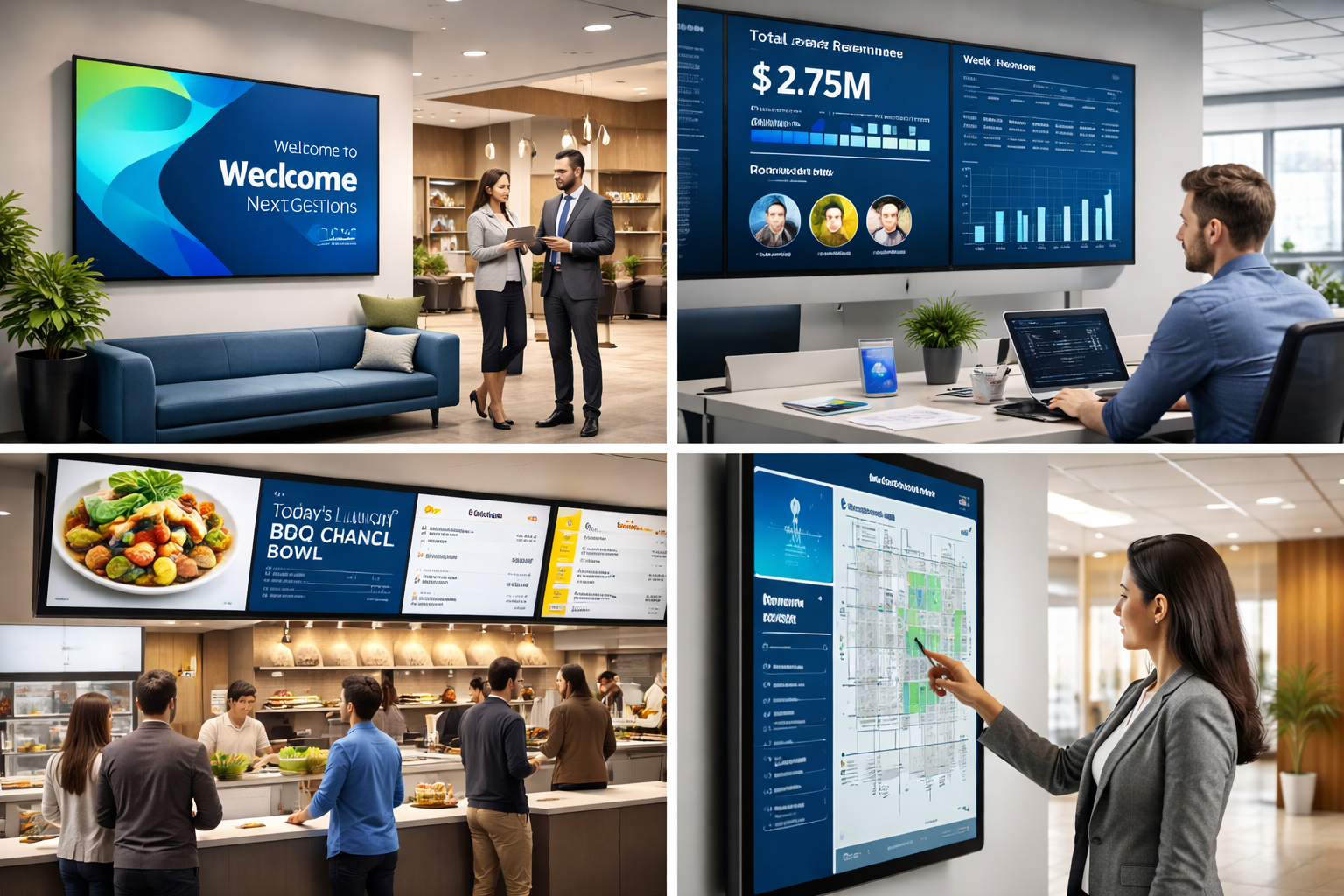
Digital Signage Best Practices for Corporate and Workplace Environments
Digital signage inside corporate and workplace environments plays a different role than advertising screens in public spaces. The goal is not to grab attention at all costs, but to communicate clearly, reinforce brand culture, and support how people move through the space.
When digital signage is planned well, it becomes part of the environment. When it is not, it quickly turns into visual noise. These best practices focus on creating digital signage that works in offices, campuses, and shared workplace settings.
Start With the Viewer’s Context
In a workplace environment, people are usually on their way somewhere. They are arriving for meetings, waiting briefly, grabbing coffee, or transitioning between spaces. Digital signage should respect that moment.
The most effective content answers a simple question: what does someone need to know right now? When signage matches the viewer’s context, it feels helpful instead of distracting.
Provide Value, Not Filler Content
Workplace digital signage should offer information that makes the environment easier to navigate or understand. This might include schedules, announcements, building information, or timely reminders.
Content that adds value earns attention. Content that exists only to fill space is usually ignored. The goal is clarity, not constant motion.
Use Motion Purposefully
Video and animation can be effective, but only when used intentionally. In corporate settings, subtle motion often works better than fast transitions or looping visuals.
Think of motion as a way to guide attention, not overwhelm it. When movement supports the message, it enhances understanding. When it competes with the space, it becomes a distraction.
Keep Design Clean and On-Brand
Digital signage should visually align with the rest of the environment. Fonts, colors, and layout should feel consistent with architectural signage, wall graphics, and brand standards.
Simple layouts are easier to absorb at a glance. Clear hierarchy, strong contrast, and restrained use of color help messages land quickly.
Update Content With Intention
Stale content signals neglect. Regular updates keep signage relevant and credible. That does not mean constant changes, but planned refreshes that reflect what is happening in the space.
Workplace signage works best when content evolves alongside the environment. Seasonal messaging, event schedules, and internal updates all benefit from thoughtful timing.
Make Calls to Action Appropriate to the Space
In workplace environments, calls to action should be realistic and low-friction. This might mean directing someone to a meeting room, highlighting an internal resource, or reinforcing a shared initiative.
The best calls to action feel like natural next steps, not marketing prompts. When the action aligns with why someone is in the space, it feels intuitive.
Digital Signage as Part of the Bigger System
Workplace digital signage is most effective when it is part of a broader signage strategy. Screens should work alongside wayfinding, environmental branding, and physical signage to create a cohesive experience.
When all elements speak the same visual language, the space becomes easier to understand and more pleasant to move through.
Next Steps
If you are planning or updating workplace digital signage, it helps to view content, placement, and design as a single system.
Explore Digital Signage Strategy for experience-focused planning, review Workplace Digital Signage for internal communication use cases, or contact the BLR team to discuss an approach tailored to your environment.