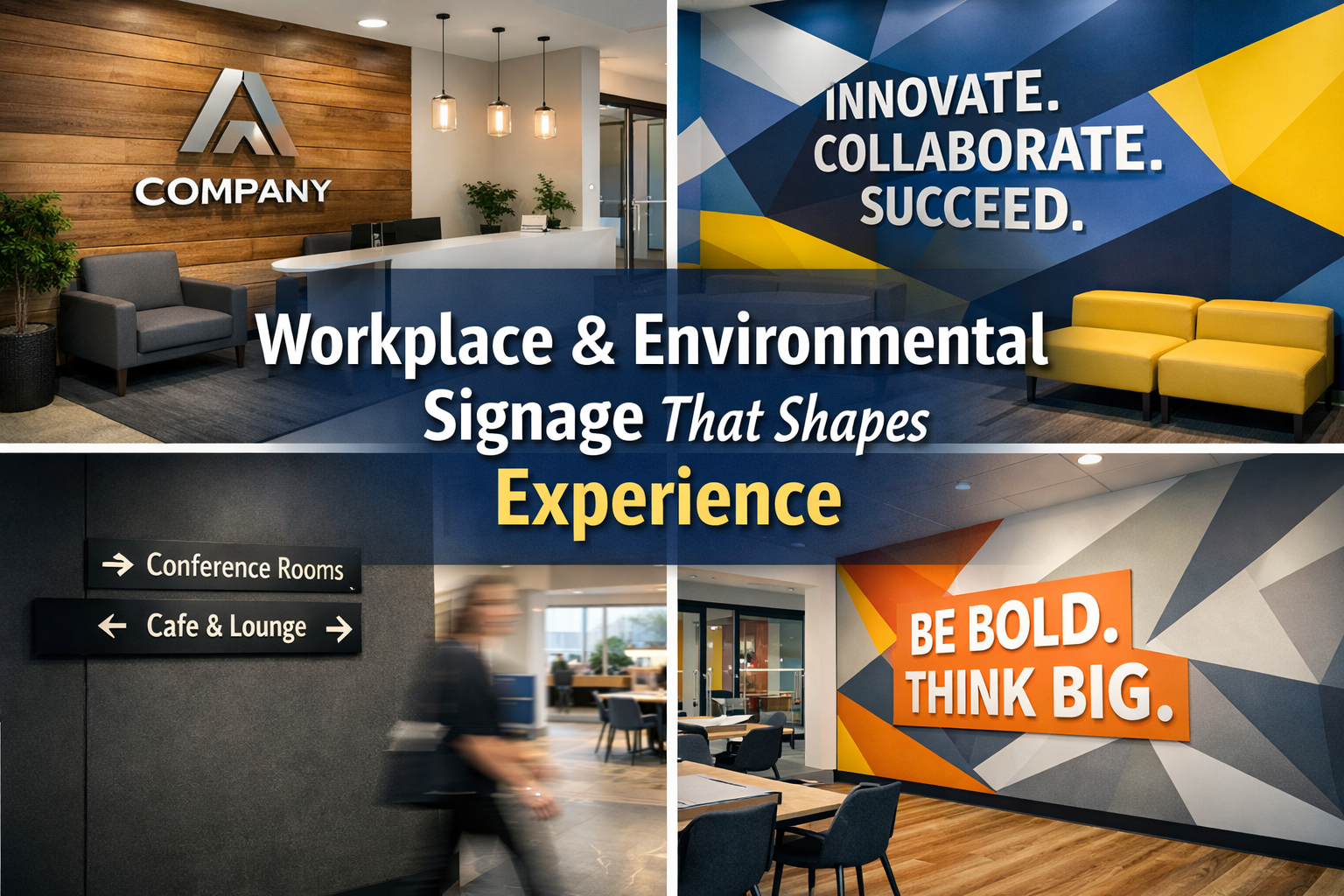
Workplace and Environmental Signage That Shapes Experience
Signage plays a bigger role in workplace environments than most people realize. It does more than label rooms or display information. It shapes how a space feels, how people move through it, and how a brand is experienced in the real world.
When signage is treated as part of the environment, it brings energy, clarity, and intention to a space. When it is added as an afterthought, even the most beautifully designed workplace can feel disconnected.
Why Environment Matters in Workplace Design
People form impressions of a space within seconds. Before a conversation happens or a meeting begins, the environment has already communicated something about the organization.
Workplace and environmental signage helps reinforce that message. It supports architecture, branding, and culture by creating visual cues that guide attention and create a sense of cohesion.
Environmental Signage as Part of Workplace Branding
Branding inside a workplace is not about repeating a logo. It is about creating a consistent visual language across walls, corridors, shared spaces, and transition areas.
Environmental signage contributes by:
- reinforcing brand identity through color, typography, and materials
- supporting tone, whether professional, creative, or welcoming
- connecting physical space to the organization’s values and culture
When environmental branding and signage work together, the space feels intentional instead of decorated.
How Signage Shapes the Experience of a Space
Experience is shaped by small moments. Entering a lobby. Finding a meeting room. Sitting down in a café. Moving between floors.
Environmental signage helps those moments feel easier and more engaging by providing context and visual continuity. It sets expectations, creates rhythm, and helps people understand how a space is meant to be used.
Workplace Signage That Balances Function and Personality
The strongest workplace environments strike a balance between function and expression. Signage should support navigation and communication while still allowing the space to feel human.
This often includes a mix of:
- architectural signage that integrates with the building
- custom environmental signage that adds personality
- wall graphics and dimensional elements that create visual interest
When these elements are designed together, they bring life to the environment without overwhelming it.
Environmental Signage Across Different Workplace Areas
Lobbies and First Impressions
Lobbies introduce the brand and set the tone. Environmental signage here often combines architectural elements with branding to create a strong sense of arrival.
Shared Spaces and Cafés
Shared spaces benefit from signage that feels less formal and more expressive. These areas are ideal for environmental branding that reflects culture and encourages connection.
Corridors and Transitional Areas
Hallways and transition zones are often overlooked, but they are where environmental signage can create flow and continuity throughout the building.
Designing Environmental Signage That Ages Well
Trends change, but environments last. The most successful workplace signage systems are designed with longevity in mind.
That means focusing on:
- timeless materials and finishes
- clear visual hierarchy
- signage that supports the architecture rather than competing with it
Environmental signage should still feel relevant years after installation, even as teams and uses evolve.
Bringing Experience, Branding, and Signage Together
Workplace and environmental signage works best when it is part of a larger system. When branding, wayfinding, digital signage, and architectural elements are aligned, the space communicates clearly and confidently.
To see how signage strategy fits into the bigger picture, explore our Digital Signage Strategy, Workplace Digital Signage, and Wayfinding Design guides.
If you are planning a workplace environment and want signage to support the experience from day one, contact BLR to start the conversation.