
Outdoor Digital Signage in the Bay Area
Outdoor digital signage does something static signs cannot: it changes. Whether you need to push a daily special, rotate promotional content, update pricing in real time, or schedule messaging around time of day or season, outdoor digital signage gives businesses the flexibility to communicate without reprinting, remounting, or calling a sign company.
At BLR Visual Communications, we design, fabricate, and install outdoor digital signage systems for businesses throughout the Bay Area. From high-brightness LED displays to full digital monument and pylon integrations, we approach every project with the same goal: visibility that performs, from the first impression to the last mile of the customer journey.
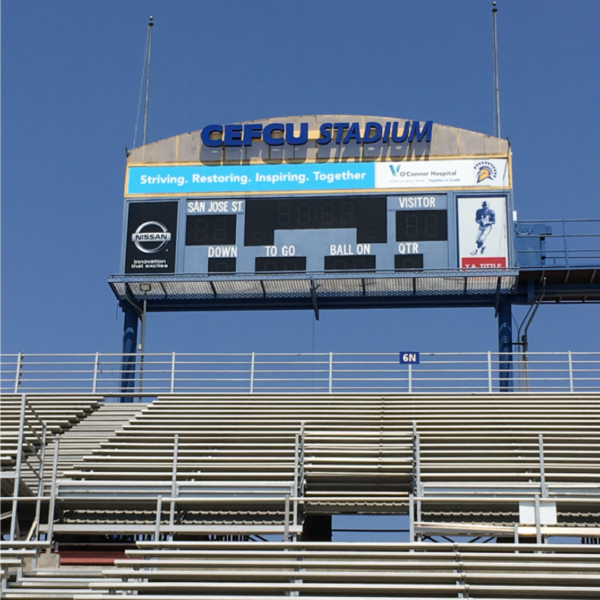
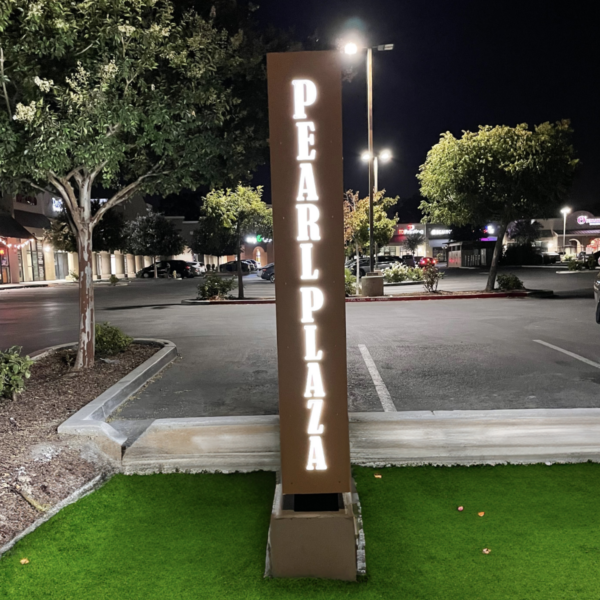
What is Outdoor Digital Signage?
Outdoor digital signage refers to electronic display systems designed specifically to operate in exterior environments, including roadside LED cabinets, electronic message centers (EMCs), digital monument signs, digital pylon panels, and large-format display installations. Unlike indoor digital screens, outdoor units must contend with direct sunlight, temperature swings, rain, dust, and extended operating hours, which makes hardware selection, brightness ratings, enclosure ratings, and thermal management critical factors in the decision.
These systems are used across a wide range of commercial applications: retailers updating promotions without new print materials, restaurants pushing daily specials to passing traffic, auto dealers rotating inventory pricing, medical campuses guiding visitors, and municipalities keeping communities informed. What makes outdoor digital signage particularly valuable is the combination of high visibility and real-time control. A business can schedule content weeks in advance or update a display in minutes from a phone or computer, without touching the sign itself.
As an outdoor digital signage company that handles everything from initial concept through installation, BLR manages the technical and structural side of these projects so businesses can focus on the content and the results.
Where Outdoor Digital Signage Performs Best
Outdoor digital signage earns its keep wherever the message needs to change and the audience is moving. Strong applications include:
• Retail and shopping centers: Rotate tenant promotions, seasonal campaigns, and anchor tenant branding without reprinting panels
• Restaurants and food service: Display daily specials, limited-time offers, and drive-through pricing that updates in real time
• Auto dealerships: Cycle current inventory highlights, service offers, and financing promotions directly from the road
• Fuel stations and convenience stores: Update fuel pricing instantly across multiple pumps or locations from a central system
• Hotels and hospitality: Promote amenities, events, and availability to passing traffic and arriving guests
• Medical and professional campuses: Communicate wayfinding, hours, and announcements to patients and visitors
• Corporate and mixed-use properties: Reinforce brand identity and communicate events across large or multi-building sites
The most effective outdoor digital signage installations are not just bright displays. They are positioned and configured to reach the right audience at the right moment in the decision-making window.
Types of Outdoor Digital Signage:
Outdoor digital signage is not a single product. The right format depends on the site, the viewing distance, the property type, what the business needs to communicate, and how frequently that message changes.

Electronic Message Centers (EMCs)
Electronic message centers are LED panels integrated into monument, pylon, or cabinet sign structures. They allow businesses to display text, graphics, and animated content that can be scheduled or updated remotely. EMCs are among the most widely used forms of outdoor digital signage because they balance flexibility, visibility, and relatively straightforward permitting pathways in many Bay Area jurisdictions.

Digital Monument Signs
Digital monument signs sit lower to the ground and are typically positioned near property entrances or along pedestrian-accessible frontages. When the architecture or zoning calls for something more grounded than a pylon, a digital monument sign delivers the same dynamic content capability in a lower-profile structure that can be designed to complement the surrounding environment.

Digital Pylon Sign Panels
For properties that already have or are planning a pylon sign, adding a digital panel to the structure creates a high-visibility platform for changing content. These integrations are popular with multi-tenant properties, fuel stations, and auto dealers who need the roadside height of a pylon combined with the message flexibility of digital. The panel can occupy part of the pylon face while static branding elements occupy the rest.

Large-Format LED Displays
Larger-scale outdoor LED displays are used when the viewing distance is significant, the property demands a premium presence, or the content itself is a key driver of customer engagement. These installations require more detailed planning around structural support, power infrastructure, brightness calibration, and viewing angle optimization, but they deliver impact that smaller formats cannot match.

Multi-Tenant Digital Directory Signs
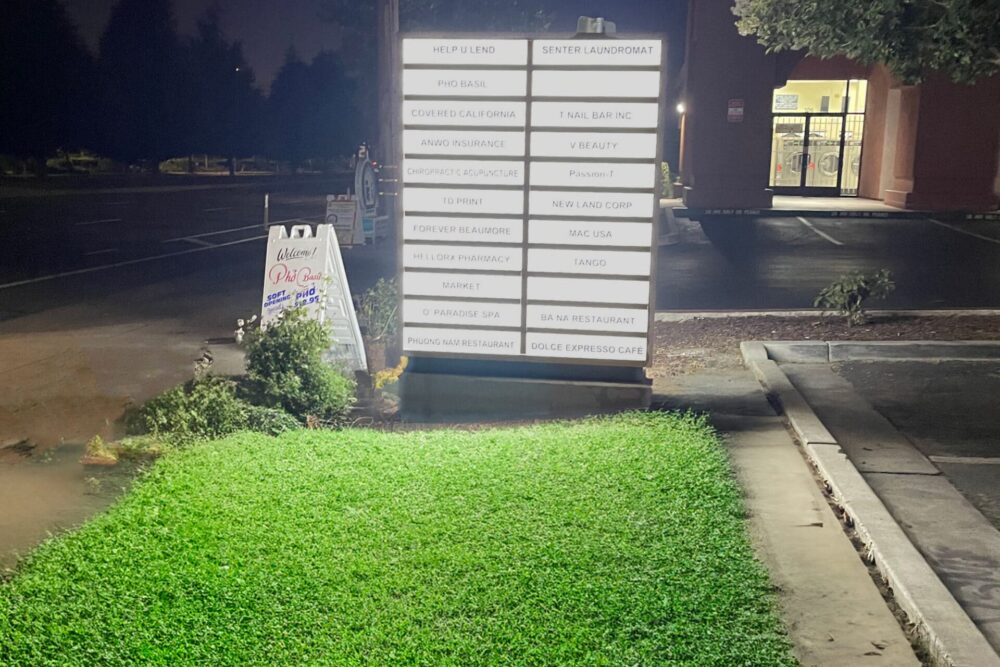
Shopping centers and office parks with multiple tenants benefit from digital directory signs that allow property managers to update tenant listings, promote individual businesses, and run shared content programs without coordinating new print panels every time a tenant changes. The result is a cleaner presentation and a more manageable long-term signage program for the property.
Hardware and Technical Considerations
Outdoor digital signage hardware is not interchangeable with indoor display technology. Screens designed for interior environments will wash out in direct sunlight, fail in temperature extremes, and degrade quickly without the enclosure protection that outdoor-rated hardware provides. Pixel pitch, brightness measured in nits, IP ratings for moisture and dust resistance, operating temperature range, and cooling or ventilation design all affect how a display performs over time in an outdoor environment.
Brightness is one of the most common misunderstood specifications. Outdoor displays typically need to operate at 5,000 nits or higher to remain legible in full sun. A screen specified correctly for a covered outdoor area may be completely unreadable when installed in a sun-exposed roadside position. Getting this right at the specification stage prevents costly replacements later.
Content management is the other side of the equation. Most outdoor digital signage systems connect to a cloud-based content management platform that allows scheduling, remote updates, multi-location management, and performance monitoring. The quality of the software matters as much as the hardware, because the flexibility that makes digital signage valuable only delivers results if the system is easy to use and reliable to operate.
Our Process for Outdoor Digital Signage Projects
Digital signage projects have more moving parts than traditional sign builds. At BLR, we manage the full scope with a process built around getting the details right before anything is installed.
Site Assessment & Use Case Review
We evaluate the location, sun exposure, viewing angles, traffic patterns, and how the display will be used day to day.
Hardware Specification & Design
We select display technology and enclosure solutions matched to the environment, then design the structural and aesthetic integration around your brand.
Permitting & Compliance
Outdoor digital signage is subject to local sign codes, brightness ordinances, and in some Bay Area jurisdictions, specific restrictions on animation frequency and hours of operation. We help navigate that process.
Fabrication & Integration
The display, housing, structural support, and electrical infrastructure are built and integrated for outdoor performance from day one.
Installation & Content Onboarding
We install the system and walk your team through the content management platform so you can start using it confidently from day one.
Bay Area municipalities vary significantly in how they regulate digital signage. Some cities welcome it; others impose detailed restrictions on brightness levels, dwell times, transition effects, and placement. Experience with local permitting makes a real difference in how smoothly these projects move.
Why Outdoor Digital Signage Delivers Results
The business case for outdoor digital signage comes down to attention and action. Research on on-premise signage has shown that digital sign improvements are consistently associated with measurable performance gains. Many surveyed businesses reporting revenue increases averaging around 10 percent following signage changes. Digital displays add a layer that static signs cannot: the ability to test and iterate. A business can run a promotion, observe traffic patterns, adjust the message, and optimize content over time in a way that would be cost-prohibitive with printed signage.
A single outdoor digital display can do the work of multiple static signs across different time windows, audiences, and promotions, without replacement costs every time the message changes. For businesses that update their messaging frequently, the economics of digital signage often make the investment case straightforward.
Why Choose BLR for Outdoor Digital Signage?
BLR Visual Communications handles outdoor digital signage projects end to end, from hardware selection and structural design through permitting, installation, and content onboarding. We do not sell displays in isolation. We build systems that work in real environments.
Outdoor-specific hardware knowledge
We specify displays built for exterior environments, not adapted from indoor technology
Integrated structural design
Digital panels are designed as part of a cohesive sign structure, not dropped into an afterthought cabinet
Bay Area permitting experience
We understand local digital signage regulations and help businesses navigate them without unnecessary delays
Content management setup
We ensure your team can actually use the system confidently from the moment installation is complete
Full project ownership
One team manages everything from concept to commissioning, so nothing falls through the gaps
If your business needs a display that earns its footprint every day, BLR can build a system that delivers.
Let’s Build an Outdoor Digital Signage System That Works for You
Frequently Asked Questions About Outdoor Digital Signage
How much does outdoor digital signage cost?
Outdoor digital signage typically costs between $5,000 and $100,000+, depending on the display size, resolution, brightness, installation requirements, and content management features.
- Small Outdoor Displays (32 to 55 inch): $5,000 – $15,000
- Commercial Outdoor Kiosks: $10,000 – $30,000
- Large LED Message Boards: $20,000 – $100,000+
- Outdoor Video Walls: $50,000 – $250,000+
Additional costs may include:
- Installation and electrical work
- Permits and engineering
- Mounting structures
- Content management software (CMS)
- Ongoing maintenance and support
For most office campuses, retail centers, and commercial properties, a professionally installed outdoor digital sign typically ranges from $10,000 to $50,000+ depending on size and functionality.
What is the difference between indoor and outdoor digital signage?
Outdoor digital signs are built to handle weather and sunlight. Compared with indoor displays, they have:
- Weatherproof enclosures that protect against rain, dust, and temperature swings.
- Much higher brightness so the screen stays readable in direct sun.
- Temperature control such as fans or heaters.
- Anti-glare and impact-resistant glass.
- More permitting, since outdoor signs are regulated by the city.
Indoor displays are not designed for these conditions and should not be used outdoors.
How does outdoor digital signage withstand weather?
Outdoor digital signage is specifically engineered to withstand rain, wind, sun, dust, and temperature extremes.
Key weather-resistant features include:
- Weatherproof enclosures rated NEMA or IP65/IP66 to protect internal components from water and dust.
- High-brightness displays that remain visible in direct sunlight.
- Temperature control systems such as fans, heaters, and ventilation to maintain safe operating temperatures.
- UV-resistant materials to prevent fading and deterioration.
- Impact-resistant glass to protect against vandalism and debris.
- Corrosion-resistant aluminum or steel cabinets designed for long-term outdoor use.
When properly specified and installed, commercial outdoor digital signs can operate reliably year-round in a wide range of weather conditions, including heavy rain, high temperatures, and strong winds.
Can outdoor digital displays be seen clearly in direct sunlight?
Yes. Outdoor digital displays are designed with high-brightness screens, typically ranging from 2,500 to 5,000+ nits, which allows them to remain clearly visible even in direct sunlight.
Additional features that improve visibility include:
- Anti-glare glass to reduce reflections
- Automatic brightness adjustment based on ambient light conditions
- High-contrast displays for improved readability
- LED technology optimized for outdoor viewing
For full-sun locations, high-brightness commercial displays are recommended to ensure content remains visible throughout the day.
What should businesses look for when choosing outdoor digital signage?
- Brightness: Enough to stay readable in direct sun.
- Weather rating: Look for NEMA or IP ratings and a sealed enclosure.
- Size and resolution: Match them to viewing distance, since drivers need larger, simpler content than pedestrians.
- Content management: Easy remote updates and the ability to monitor the sign.
- Power and installation: Electrical service, mounting structure, and access for service.
- Local rules: Cities often set limits on size, brightness, and message changes.
- Warranty and support: Who services the sign if something fails?
Do outdoor digital signs require permits?
Yes. In most cities, outdoor digital signs require permits before installation. Requirements vary by municipality and may include review of:
- Sign size and location
- Brightness levels
- Structural engineering
- Electrical systems
- Traffic visibility and safety
- Zoning and land use regulations
Additional approvals may be required from:
- Property owners or landlords
- HOA or business park management
- Planning departments
- Building and electrical departments
Because digital signage is illuminated and often electronically controlled, permitting is typically more extensive than for non-illuminated signs. It’s best to verify local requirements early in the project to avoid delays and compliance issues.
For projects in California, permit review can take anywhere from a few weeks to several months, depending on the jurisdiction and sign complexity.
Can outdoor digital signage content be updated remotely?
Yes. Outdoor digital signs are typically managed through a Content Management System (CMS), so you can change text, images, video, and schedules from any internet-connected device without visiting the sign. This makes it easy to keep messages current, run promotions on a schedule, and manage signs at multiple locations from one place.