Interior Identification Signs
Interior signage helps people navigate your space with clarity and confidence. From room IDs to departmental markers, these signs identify key spaces while staying on-brand.
Identification Signs
• Room Identification Signs: conference rooms, offices, classrooms, etc.
• Name Plates: desk or wall-mounted, interchangeable or fixed
• Department/Area Markers: lobbies, cafeterias, labs, etc.


Wayfinding / Directional Signs
• Directional Arrow Signs: hallways, corridors, lobbies
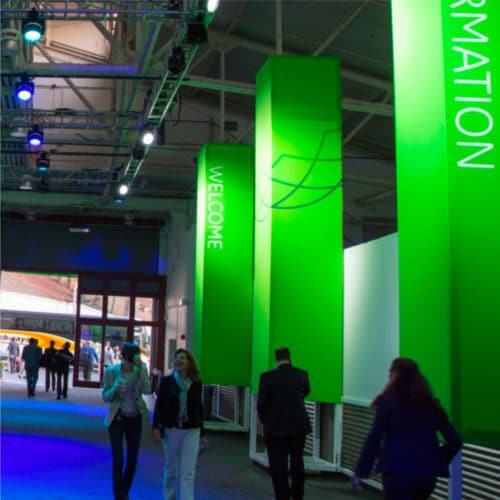
• Overhead Ceiling Signs: airports, hospitals, campuses
• Directory Boards: lobbies with tenant or department listings
• Floor Graphics: arrows, footprints, branded navigation cues


ADA & Code-Compliant Signs
• ADA Room Signs: raised text and Braille, proper contrast, non-glare finish
• Exit & Stairwell Signs: illuminated or non-illuminated per fire/life safety codes
• Restroom Signs: pictograms, tactile lettering, Braille
• Elevator & Emergency Egress Signs: floor level, evacuation maps


Informational Signs
• Regulatory Signs: No Smoking, Authorized Personnel Only, PPE Required
• Building Maps & Directories: often paired with “You Are Here” markers
• Digital Screens: rotating announcements, schedules, real-time updates


Branding & Environmental Graphics
• Lobby & Reception Signs: dimensional logos, illuminated wall features
• Wall Murals & Supergraphics: large-scale branded or decorative graphics
• Glass & Window Films: privacy frosting, patterns, or branded designs
• Donor Walls & Recognition Displays: universities, hospitals, nonprofits


Temporary & Changeable Signs
• Insert/Frame Signs: swap out paper or graphics in lobbies or hallways
• Event & Conference Signage: portable stands, retractable banners
• Interactive Digital Kiosks: wayfinding maps, directories, event schedules

Frequently Asked Questions About Interior Signs
What types of interior signs are used in commercial spaces?
Commercial spaces use several kinds of interior signs:
- Identification: Room names and numbers, nameplates, and department markers.
- Wayfinding: Directional arrows, overhead signs, directory boards, and floor graphics.
- ADA and code signs: Room signs with raised text and Braille, restroom signs, exit and stairwell signs, and elevator signs.
- Informational and safety: Building maps, rules, and regulatory signs.
- Branding: Dimensional logos, illuminated wall features, wall murals, and window films.
- Temporary: Insert-style signs, portable stands, and retractable banners.
What materials are commonly used for interior signs?
Common materials for interior signs include acrylic, aluminum, stainless steel, glass, PVC, vinyl graphics, wood, and fabric graphics. The best choice depends on the application, budget, and desired aesthetic. Acrylic, dimensional aluminum letters, and vinyl graphics are among the most popular options for modern office and corporate environments.
Can interior signage be customized to match our brand?
Yes. Interior signage can be fully customized to match your brand, including your logo, colors, fonts, materials, and messaging, creating a consistent and professional experience throughout your space.
Which interior signs need to be ADA compliant?
Signs that identify permanent rooms and spaces need to be ADA compliant. That includes room names and numbers, restrooms, exit doors, and stairwells. These signs need raised characters, Grade 2 Braille, high contrast, and a non-glare finish, and they must be mounted at the right height and location.
Directional and informational signs, such as arrows or directories, generally need readable, high-contrast characters but not Braille. Temporary signs are not covered.
Can interior signage include dimensional lettering, graphics or illumination?
Yes. Interior signage can incorporate dimensional lettering, vinyl graphics, wall murals, illuminated signs, and LED lighting to enhance branding, visibility, and the overall customer experience.
How do I choose the right interior signage for my space?
- Purpose: Decide what each sign needs to do: identify, direct, inform, or promote your brand.
- Audience: Think about visitors, employees, and anyone who needs accessible signs.
- Compliance: Rooms and restrooms need ADA signs. Fire and life safety signs may be required.
- Surfaces: Walls, glass, and ceilings each need different mounting methods.
- Flexibility: If names or departments change often, choose signs with replaceable inserts.
- Brand: Keep materials, fonts, and colors consistent from the lobby to the back hallway.