Construction Safety Week 2026: Why Clear Communication Matters on Every Job Site
Construction Safety Week 2026: Why Clear Communication Matters on Every Job Site
Construction Safety Week 2026 takes place May 4–8 under the theme “All In Together: Recognize, Respond, Respect.” Across the construction industry, companies are taking time to focus on reducing job site injuries, improving communication, and reinforcing a culture where safety is everyone’s responsibility.
This year’s campaign emphasizes three key ideas:
- Recognize hazards before they become incidents
- Respond with proactive safety measures
- Respect the people doing the work every day
While conversations around construction safety often focus on equipment, training, and compliance, communication is another critical piece of the puzzle that’s sometimes overlooked.
On busy job sites, facilities, campuses, and commercial properties, people rely on clear visual communication constantly. Directional signage, hazard warnings, site identification, temporary notices, ADA-compliant wayfinding, and digital messaging systems all help workers and visitors navigate spaces more safely and efficiently.
At BLR Visual Communications, we work with businesses, campuses, municipalities, and commercial facilities to create signage systems designed for visibility, clarity, and usability. While every project is different, one thing remains consistent: effective communication helps reduce confusion.
Why Communication Matters in Construction and Facility Safety
Construction sites and active commercial environments are constantly changing. Entrances move. Restricted areas shift. Equipment routes change. Deliveries arrive. Contractors, visitors, and employees all need to know where they’re going and what precautions to take.
When communication is unclear, mistakes happen.
Simple issues like missing directional signage, poorly placed warnings, inconsistent labeling, or difficult-to-read instructions can create unnecessary risks. Even in completed facilities, unclear wayfinding can lead to confusion during emergencies or slow down response times when people need information quickly.
That’s why many organizations invest in signage and visual systems that prioritize:
- Visibility from a distance
- Consistent messaging
- ADA accessibility
- Durable materials for outdoor environments
- Easy-to-understand directional guidance
- Digital updates for changing conditions
Safety communication isn’t just about compliance. It’s about helping people move through spaces with confidence.
Supporting Safer Environments Through Signage
Signage plays a role in nearly every stage of a project lifecycle, from active construction through long-term facility operations.
Temporary construction signage can help identify:
- Restricted access areas
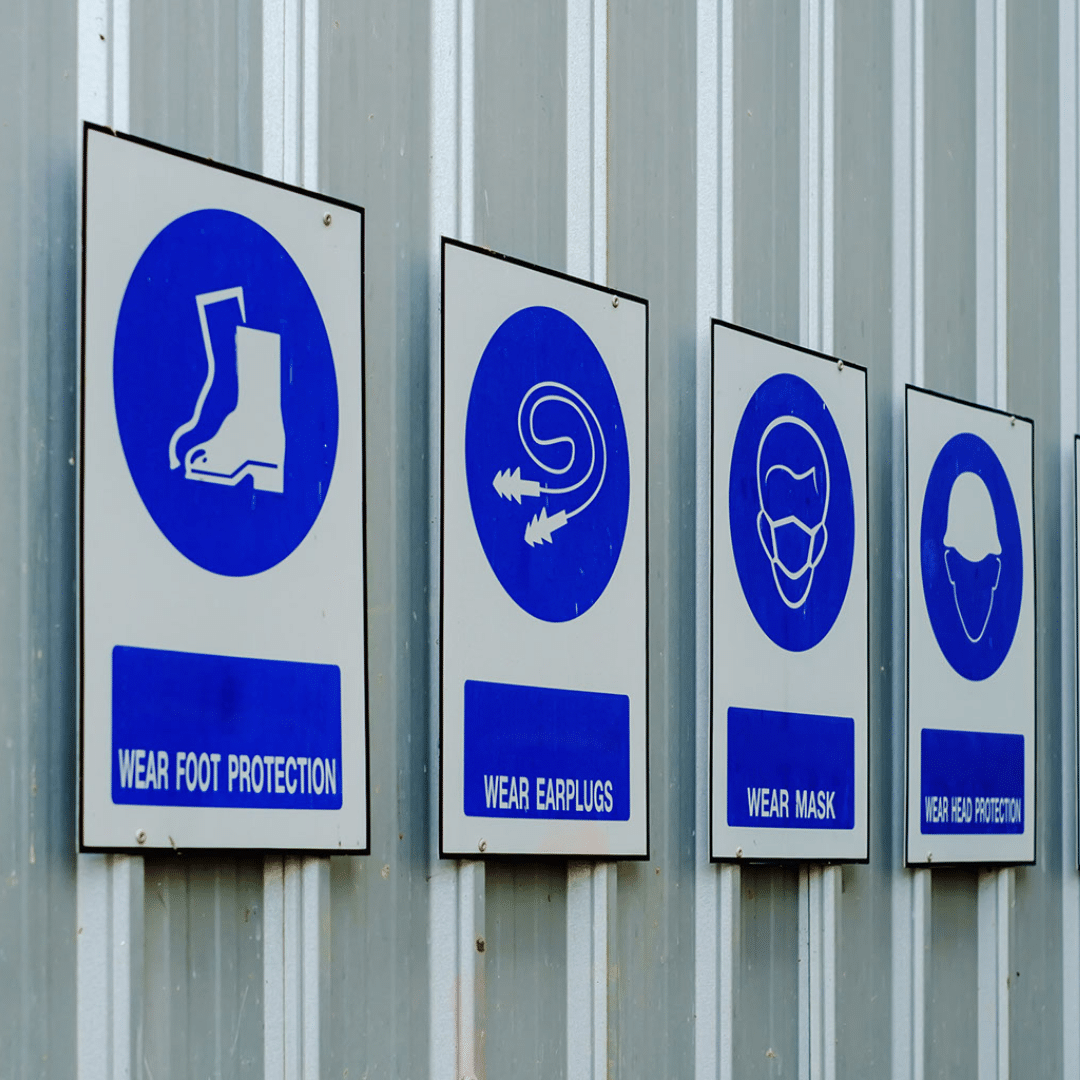
- PPE requirements
- Emergency exits
- Delivery zones
- Equipment pathways
- Visitor check-in locations
Permanent signage systems support long-term safety through:
- Building identification
- ADA-compliant wayfinding
- Parking and traffic flow guidance
- Emergency evacuation information
- Directional signage throughout campuses and facilities
Digital signage has also become increasingly valuable for organizations that need to communicate changing information quickly. Schools, hospitals, corporate campuses, and industrial facilities often use digital displays to share announcements, emergency messaging, schedules, and safety reminders in real time.
Construction Safety Is a Shared Responsibility
One of the strongest parts of Construction Safety Week is the reminder that safety is not owned by one department alone. It requires participation across teams, vendors, contractors, and leadership.
The 2026 theme, “All In Together,” reflects the reality that safer environments happen when everyone contributes to awareness and accountability.
That includes:
- Project managers
- Contractors
- Facility teams
- Safety coordinators
- Vendors
- Designers
- Operations staff
Even seemingly small details can have a larger impact when combined into a well-planned environment. Clear communication, thoughtful layouts, and visible messaging all contribute to helping people make safer decisions.
Looking Ahead
As projects become larger and facilities become more complex, the importance of strong visual communication continues to grow. Whether through architectural signage, digital displays, wayfinding systems, or branded environmental graphics, organizations are increasingly looking for ways to improve both user experience and safety at the same time.
Construction Safety Week serves as a good reminder that creating safer spaces isn’t only about reacting to problems. It’s about planning ahead, improving visibility, and making information easier to understand before issues arise.
At BLR Visual Communications, we’re proud to support organizations with signage and communication solutions that help people navigate spaces more clearly and confidently every day.