Campus Wayfinding Signage: Helping People Navigate College Campuses
College campuses can be difficult places to navigate. Students may know their daily routes, but prospective students, parents, new employees, event attendees, vendors, and other visitors often arrive with little idea of where they need to go.
That’s where a well-planned campus wayfinding signage system becomes important. Rather than relying on a collection of individual signs added over time, colleges and universities can use wayfinding to create a more consistent experience from the moment someone enters campus until they reach their destination.
Why Campus Wayfinding Signage Matters
A college campus may include academic buildings, residence halls, athletic facilities, administrative offices, parking areas, libraries, student centers, and outdoor gathering spaces spread across a large property.
Good wayfinding helps connect all of those spaces.
The goal isn’t simply to add more signs. It’s to provide the right information at the points where people need to make decisions. Clear, consistent signage can reduce confusion, help visitors move through campus more confidently, and create a more organized experience throughout the property.
Start With Campus Entrances and Arrival Points
Wayfinding begins before someone reaches a building. Campus entrances should make it clear that visitors have arrived at the right place and help them understand where to go next.
Monument signs, campus identification, parking signage, directories, and directional signs can work together to guide drivers and pedestrians toward major destinations.
This is especially important for first-time visitors attending campus tours, orientation, athletic events, performances, conferences, or other activities where they may be unfamiliar with the property.
Use Directional Signage at Decision Points
One of the most important parts of campus wayfinding is placing information where someone actually has to make a choice.
At intersections, pathways, parking areas, and building entrances, directional signage can point people toward destinations such as:
- Academic buildings
- Admissions and administrative offices
- Libraries and student centers
- Residence halls
- Athletic facilities
- Visitor parking
- Event venues
- Campus services
A sign placed after someone has already made the wrong turn isn’t very helpful. Effective wayfinding considers how people naturally move through the campus and provides guidance before confusion happens.
Clearly Identify Buildings and Destinations
Once visitors reach the right area, building identification confirms that they have arrived at the correct destination.
Consistent building names, entrance signs, dimensional lettering, directories, and identification signage make destinations easier to recognize while also contributing to the overall appearance of the campus.
For colleges with numerous buildings, consistent terminology is particularly important. The names used on maps, directories, directional signs, and building identification should work together rather than forcing visitors to interpret different naming systems.
Plan for Pedestrians as Well as Drivers
College campuses often have two very different navigation experiences: getting around by vehicle and getting around on foot.
Drivers need information they can understand quickly while approaching entrances, parking areas, and intersections. Pedestrians have more time to read detailed directions but may encounter many more decision points as they travel between buildings.
A complete campus wayfinding signage system considers both experiences instead of expecting one type of sign to serve everyone.
Make Accessibility Part of the Wayfinding System
Accessible navigation should be considered throughout the campus rather than treated as a separate signage issue.
ADA-compliant signage, accessible entrance identification, parking signage, room identification, and directions to accessible routes all contribute to a campus that is easier for everyone to navigate.
Planning these elements as part of the larger wayfinding system also helps maintain visual consistency instead of creating a patchwork of signs added only when a specific need arises.
Use Directories and Maps for Complex Campuses
For larger universities, a single directional sign may not provide enough information. Campus maps and directories can give visitors a broader understanding of where they are and how different destinations relate to one another.
Directories can be especially useful near major entrances, parking areas, student centers, transit stops, and other high-traffic locations.
Digital directories and interactive displays can also provide flexibility when information changes frequently, allowing schools to update destinations, events, announcements, or other campus information without replacing permanent signage.
Keep Campus Signage Consistent
College campuses grow and change over time. New buildings are constructed, departments move, facilities are renovated, and individual signs are often replaced as needed.
Without an overall plan, that can eventually create a collection of signs with different colors, terminology, materials, fonts, and directional styles.
A coordinated wayfinding system establishes standards that can be used throughout the campus and expanded as the university changes. Consistency makes signage easier to recognize while reinforcing the school’s visual identity.
Real-World Campus Signage at San Jose State University
BLR Visual Communications has worked with San Jose State University on a variety of signage, graphics, and branding projects over the years.
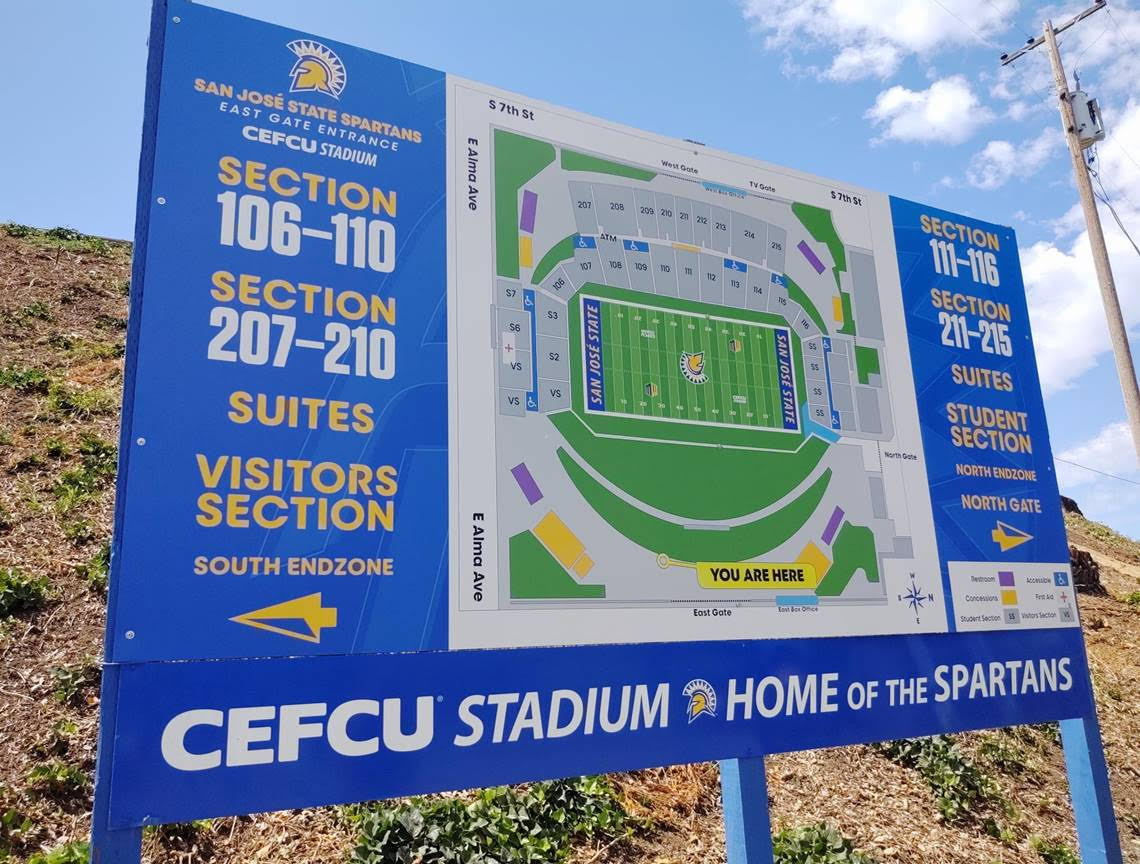
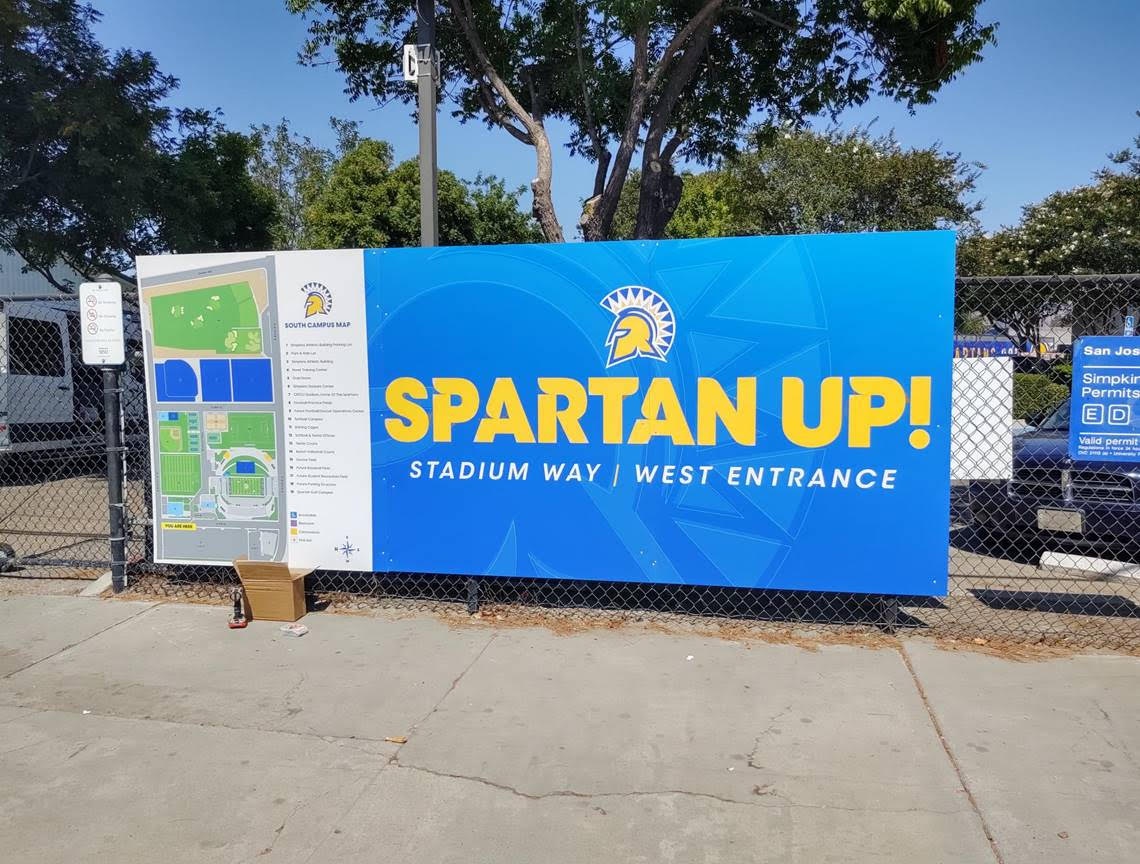
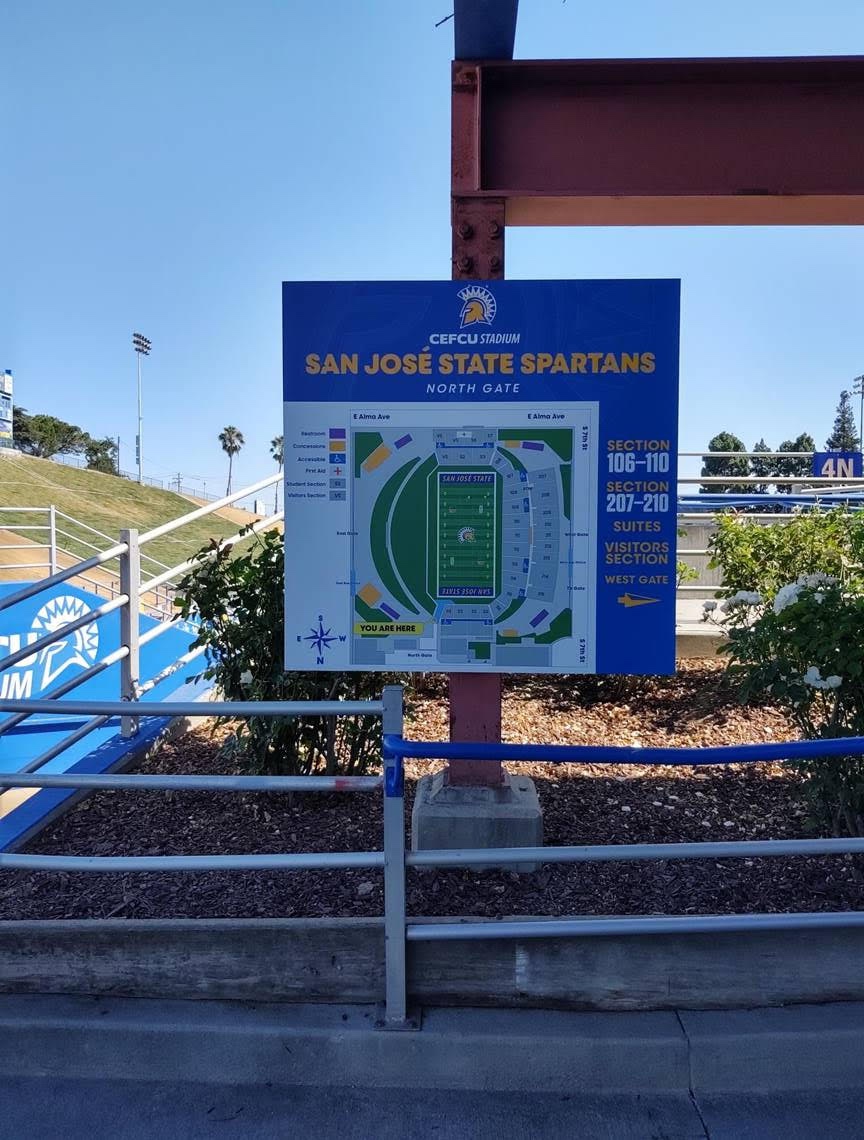
One highly visible example was the rebranding of Spartan Stadium when it became CEFCU Stadium – Home of the Spartans. BLR created and installed new signage throughout the facility, including exterior and interior grandstand signage, ticket office branding, scoreboard graphics, and field signage.
Projects like these demonstrate something that applies throughout a college campus: signage has to do more than identify a location. It needs to work within the surrounding environment, support the institution’s identity, and help create a cohesive experience for the students, staff, visitors, and guests using the space.

Planning a Better Campus Wayfinding System
Improving campus wayfinding doesn’t necessarily mean replacing every sign at once. It starts with understanding how people currently move through the property, where confusion occurs, and which destinations are hardest to find.
From there, colleges and universities can develop a coordinated system of identification, directional, informational, accessibility, parking, and digital signage that makes the campus easier to navigate today and easier to update in the future.
BLR Visual Communications designs, fabricates, and installs custom signage and wayfinding solutions for educational facilities throughout San Jose and the Bay Area. Contact BLR to discuss signage needs for your college or university campus.