Wayfinding Design, Helping People Navigate Spaces With Confidence
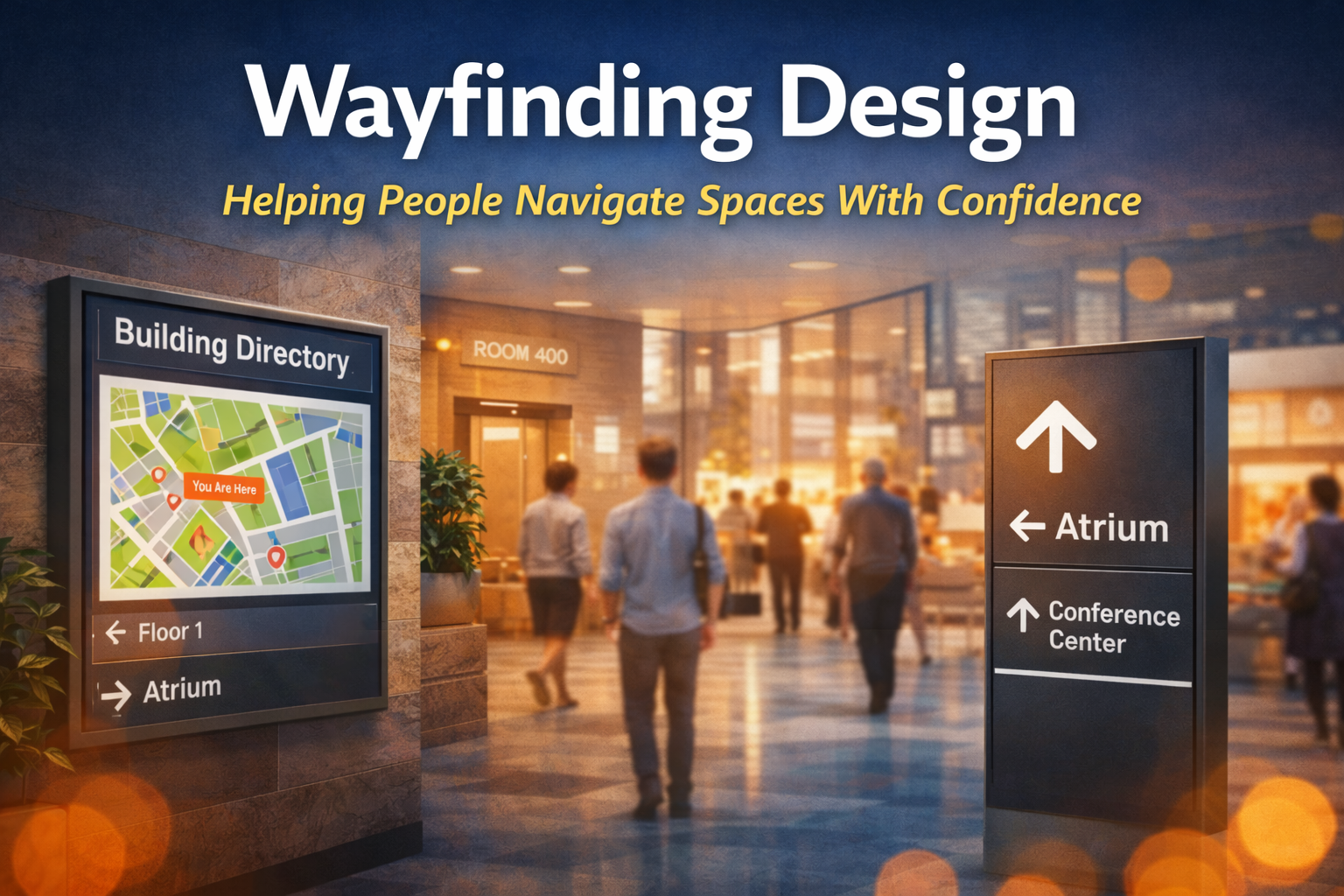
Wayfinding Design, Helping People Navigate Spaces With Confidence
Wayfinding is how a space communicates. It answers questions people have the moment they arrive. Where am I. Where do I go next. Am I on the right path. When wayfinding is done well, people move through buildings with confidence without needing to stop and think.
At BLR, wayfinding is treated as a system, not a collection of signs. It works best when it is coordinated with architectural signage, building identification, and the overall experience of the space.
What Wayfinding Really Does
A helpful way to think about wayfinding is to picture a well-designed trail. You do not need a sign every ten feet. You need the right sign at the right moment. Wayfinding supports people at decision points, reassures them as they move, and reduces the stress that comes from confusing layouts.
Great wayfinding typically supports four things:
- Orientation: helping people understand where they are in the bigger picture
- Direction: guiding people at key decision points
- Reassurance: confirming that people are still on the right path
- Flow: making movement through the space feel natural and intuitive
Where Wayfinding Matters Most
Wayfinding is valuable anywhere people need to navigate unfamiliar spaces. It becomes essential when layouts are complex, traffic is high, or the stakes of confusion are significant.
Corporate Offices and Campuses
Large offices and campuses often include multiple floors, repeated corridors, and shared spaces that look similar. Wayfinding helps employees, visitors, and vendors move confidently through the environment, especially when buildings grow over time.
Healthcare and Medical Environments
Healthcare spaces are stressful by nature. People are often anxious, in a hurry, or navigating while distracted. Wayfinding systems support calm and clarity by making destinations easy to find, especially for first-time visitors.
Educational Facilities
Schools and campus environments serve a wide mix of people. Students, families, staff, and visitors all move through the space with different familiarity levels. Wayfinding helps reduce confusion while keeping traffic moving smoothly during busy times.
Public-Facing Buildings and Large Complexes
Airports, civic buildings, and large complexes create constant navigation challenges. Wayfinding becomes a trust-builder. When people can find their destination easily, the space feels more welcoming and more professional.
Wayfinding as Part of Architectural Signage
The most effective wayfinding does not look like it was added at the end. It feels integrated into the architecture. Scale, placement, materials, and hierarchy matter as much as the message itself. When wayfinding is aligned with architectural signage, it supports the environment instead of competing with it.
This is also where visual consistency matters. A coordinated system helps people learn the “language” of the building. Once they recognize the patterns, navigation becomes easier with every step.
Digital and Physical Wayfinding Working Together
Digital and physical wayfinding often work best when each plays a clear role. Physical signage provides steady, reliable direction that is always visible. Digital wayfinding can be useful when information changes, when destinations rotate, or when spaces host frequent events.
When digital and physical signage are coordinated, the experience feels seamless. People do not have to translate multiple systems. They simply follow the cues that the space provides.
A Real-World Example, Wayfinding at Scale for Google’s Mass Timber Project
BLR was selected to execute architectural and wayfinding signage for Google’s first Mass Timber construction project. The scope included comprehensive exterior signage, from parking lot signage to highly custom monuments and directional wayfinding. The signage design, fabrication, and installation needed to align with the overall goals of Mass Timber construction.
The project also included an extensive amount of interior wayfinding signage. Consistency across exterior and interior environments supported a clear transition from arrival to navigation. This is where a system approach matters. People should feel like the building is guiding them, not challenging them.
Planning Wayfinding Systems That Last
Wayfinding should support first-time visitors and daily users at the same time. The goal is not to add more signs. The goal is to reduce confusion. The strongest systems anticipate where people hesitate and provide clarity before frustration sets in.
Wayfinding systems tend to hold up best when they are built around simple principles:
- Start with the journey: map how people move through the space
- Prioritize decision points: guide people where choices happen
- Build visual consistency: help people learn the signage language
- Reduce clutter: fewer messages, stronger hierarchy
- Plan for change: support growth and expansion over time
Creating Spaces People Can Navigate Easily
Wayfinding is one of the simplest ways to improve the experience of a space. When people can navigate easily, everything feels smoother. Meetings start on time. Visitors feel welcomed. Staff spend less time giving directions. The building works the way it was intended to work.
If you are planning architectural signage, directional signage, or a full wayfinding system, BLR can help create a cohesive approach that fits the space and supports the people moving through it.
Explore Portfolio examples, learn more about Sign Products & Services, or Contact the team.