Digital Signage Strategy, Designing Experiences That Drive Engagement
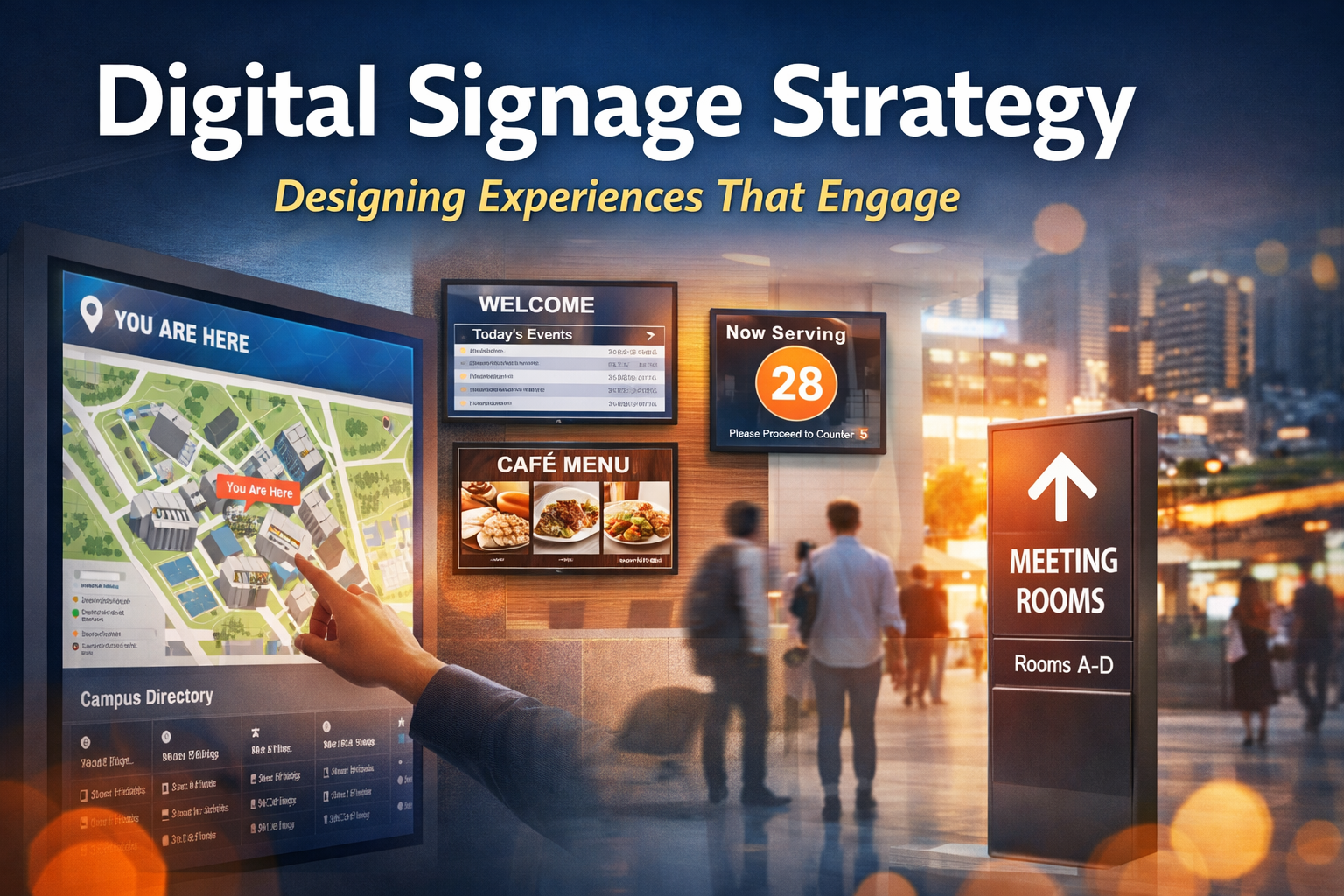
Digital Signage Strategy, Designing Experiences That Actually Drive Engagement
Digital signage works best when it is treated as part of the environment, not as an add-on. Screens, displays, and digital touchpoints shape how people move through a space, absorb information, and feel while they are there. When digital signage is planned with intention, it becomes part of the experience instead of visual noise competing for attention.
At BLR, digital signage is approached as a communication system that lives within architecture, wayfinding, and branding. The goal is not just to display content, but to guide, inform, and connect people to the spaces they are in.
Why Strategy Matters in Digital Signage
Think of digital signage like lighting in a building. You can install fixtures everywhere, but without a plan, the space still feels wrong. Some areas feel harsh, others feel dim, and the experience becomes distracting rather than supportive.
Digital signage works the same way. Placement, timing, content, and integration all matter. Screens that are placed without considering how people move through a space often get ignored. Content that does not match the environment or moment feels disconnected. Strategy is what turns individual screens into a cohesive experience.
From Message to Moment, Designing the Digital Experience
Effective digital signage starts by understanding context.
- Who is moving through the space
- How long they are there
- What they need to know at that moment
In a corporate office, the goal might be clarity and flow. In a café or shared space, it might be warmth, personality, and connection. In a large campus or multi-building environment, signage often supports navigation first and branding second.
When digital signage aligns with architecture and wayfinding, information feels intuitive. People know where to go, what to expect, and how the space works without stopping to think about it. That is the difference between signage that exists and signage that supports experience.
Where Digital Signage Performs Best
Digital signage shines in environments where information, movement, and identity intersect.
Corporate Offices and Campuses
In large office environments, digital signage supports communication, orientation, and culture. Displays reinforce brand identity, highlight shared spaces, and help employees navigate complex buildings. When paired with architectural and wayfinding signage, digital elements feel like part of the building rather than an afterthought.
Retail and Public-Facing Spaces
In retail environments, digital signage helps guide attention and support storytelling. It complements physical signage and environmental branding, creating a layered experience rather than a single focal point.
Healthcare and Institutional Settings
In healthcare and institutional spaces, clarity matters. Digital signage often supports wayfinding, real-time information, and updates while working alongside static signage systems. The experience needs to feel calm, reliable, and easy to follow.
Restaurants and Shared Gathering Spaces
In restaurants and cafés, digital signage often blends information with atmosphere. When thoughtfully integrated, it enhances the space instead of overpowering it.
Digital Signage and DOOH, Understanding the Difference
Digital signage and Digital Out of Home advertising often get grouped together, but they serve different purposes.
- Digital signage lives within a space. It supports people who are already there.
- DOOH speaks to audiences passing through public environments at scale.
Knowing the difference matters because the planning is different. Digital signage focuses on experience and context. DOOH focuses on reach and repetition. When the two are used appropriately, each supports its role without competing for attention.
How BLR Approaches Digital Signage
BLR’s work consistently integrates digital signage with architectural, environmental, and wayfinding systems. Projects are planned so signage feels intentional and cohesive across an entire space.
For example, BLR executed architectural and wayfinding signage for Google’s Mass Timber construction project. The scope included exterior signage, custom monuments, parking and directional signage, and extensive interior wayfinding. Every element had to align with the goals of the building itself, creating a unified experience from arrival through navigation.
In another corporate office project, BLR fabricated and installed more than 2,500 custom signs across a 45-story building. The café environments became a focal point through creative signage, dimensional lettering, wall graphics, wraps, and murals. Each café had its own identity while still feeling connected to the larger workplace experience.
These projects reflect BLR’s approach. Signage is planned as part of the environment, not layered on afterward. Digital elements are integrated where they add clarity, personality, or connection.
Planning Digital Signage That Works Long-Term
Successful digital signage projects begin with the right questions.
- What role does signage play in this space
- How do people move through it
- What information needs to change over time
Designing with flexibility in mind allows signage systems to stay relevant without constant rework. When digital signage is aligned with architectural signage and wayfinding from the start, the result feels natural and intuitive.
Designing a Smarter Digital Experience
Digital signage is most effective when it feels like it belongs. When screens, graphics, and wayfinding are planned together, spaces communicate clearly and confidently.
If you are considering digital signage as part of a larger signage or branding project, BLR brings experience across digital, architectural, and environmental signage to help create systems that work together.
Explore BLR’s Digital Signage capabilities, view the Portfolio, or Contact the team to start planning a digital experience that fits your space.